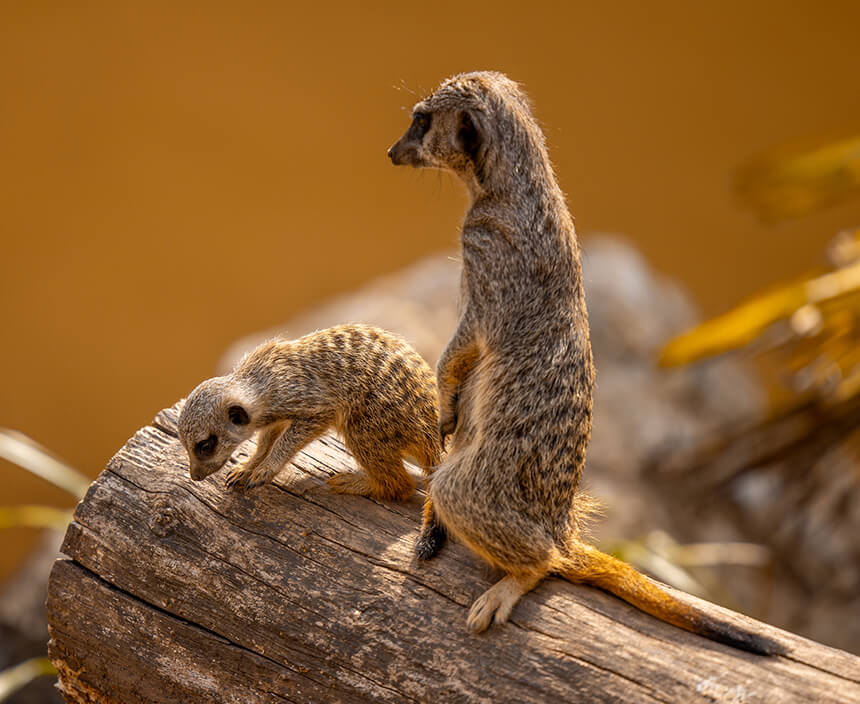
Golden headed lion tamarin
Leontopithecus chrysomelas
IUCN red list status:
Endangered
For more information, please visit iucnredlist.org


They are found in the tropical forests of Brazil, South America.

Golden-headed lion tamarins are omnivores. They eat a mixture of fruits, nectar, and flowers, as well as insects and bird eggs.

Golden headed lion tamarins are social animals that live in groups of around 2-8 members, typically consisting of a pair of adults and their offspring.

In the wild, they typically live up to 12 years. They have been known to live up to around 20 years in human care.
Golden headed lion tamarins
Golden headed lion tamarins are endemic to the dense rainforests of Brazil. They typically live in small groups of around 2-8 individuals, generally consisting of a pair of breeding adults and their offspring. Golden headed lion tamarins typically give birth to twins, after a gestation period of 140-150 days. Both parents will care for the offspring, who help to carry the babies on their back when they are young. Golden headed lion tamarins communicate by a series of noises such as clucks, trills and whines.
Conservation
Golden headed lion tamarins are currently classified as Endangered under the IUCN Red List. This means that they are at high risk of going extinct in the wild. Their main threat is habitat loss, caused by logging and unsustainable development and agriculture. You can help golden headed lion tamarins by looking for the FSC logo when purchasing items made from wood, paper and cardboard boxes.
Did you know?
To defender their territory, they will raise their mane to make themselves look bigger and flick their tongue at the intruder.