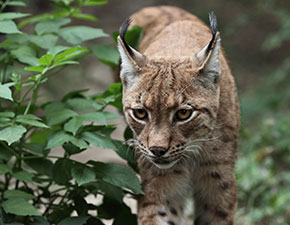

Pallas's cat
Otocolobus manul
IUCN red list status:
Least Concern
For more informations, please visit iucnredlist.org

The Pallas’s cat lives in the rocky mountainous regions of Central, South and East Asia.

Pallas’s cats are small carnivores. Their diet consists of small rodents and other small mammals such as pika.

Females carry 3-6 kittens, over a gestation of 9-10 weeks. Kittens will become fully independent after 5 months of age. They live for 8-10 years in total.

Pallas’s cats are elusive and solitary animals. They are crepuscular, which means they are most active during dusk.
Pallas's cat
The Pallas’s cat is a shy, solitary small carnivore. They are ambush predators which mean they will use stealth to sneak up on prey before pouncing.
They typically weigh up to 11 pounds. They measure around 2 ft in length, with a 10-inch tail that they use to keep themselves warm over the winter.
Conservation
The Pallas’s cat is currently classed as Least Concern on the IUCN Red List. Their population is currently decreasing, because their habitat is becoming fragmented and destroyed. This is largely due to increasing numbers of livestock, and infrastructure in their native regions. Pallas’s cats are also threatened by attacks from herding dogs, and accidental capture during hunting. You can help Pallas’s cats by raising awareness on this species.
Did you know?
Their fur is extremely dense to keep themselves warm during winter months. They have around 9,000 hairs per square cm, they also have a warm tail that is long enough to wrap around themselves like a scarf.