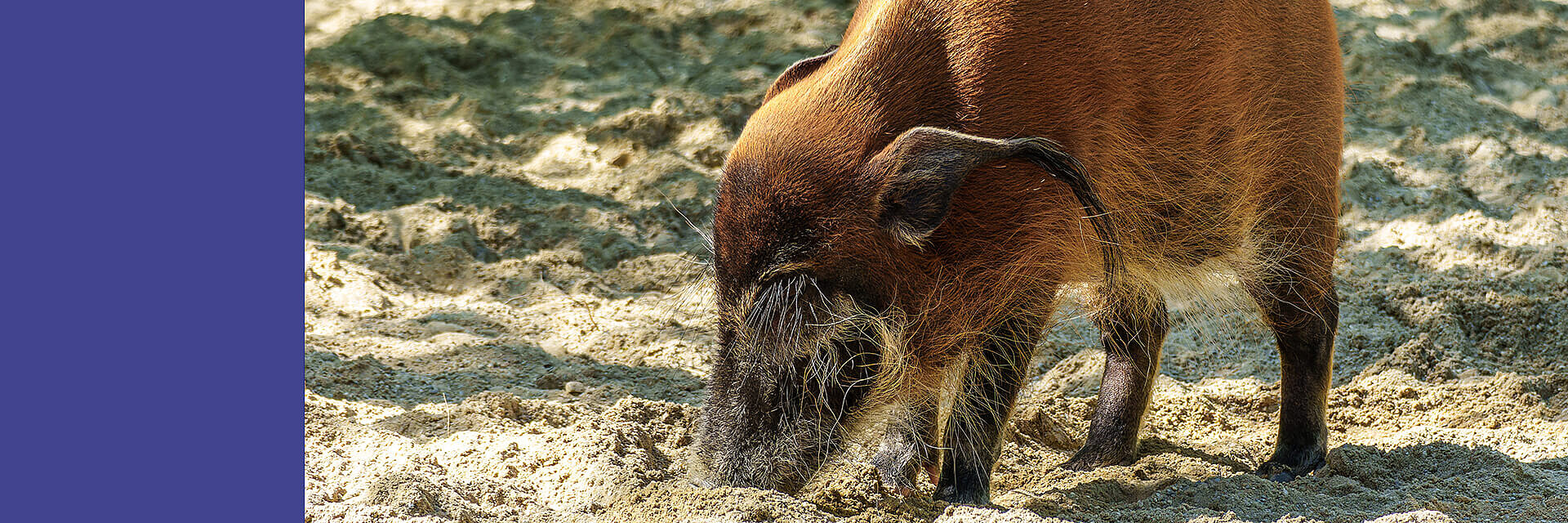
Red river hog
Potamochoerus porcus
IUCN red list status:
Least Concern
For more informations, please visit iucnredlist.org


Red river hogs are found in the dense rainforests of Western and Central Africa.

Red river hogs are omnivores. Typically, they will eat roots and tubers, but they can also eat dead animals, and insects when they are available.

In the wild, they live up to around 15 years. Under human care, they have been known to live up to 20 years.

Red river hogs are social animals, who live in groups that can range between 2 and 20 females, and one adult male.
Red river hog
Red river hog are brightly coloured, social animals. They live in social groups of around 2 to 20 individuals, known as sounders. They are loud communicators, using a variety of grunts and squeals. They are very territorial animals and will often establish themselves in the family group through ritual fights, where they will whip each other with their tails and snort loudly. They love to wallow in muddy ponds and chilly streams to cool themselves down during hot weather.
Conservation
Red river hogs are currently classified as Least Concern under the IUCN Red List. Despite this, their population is decreasing. They face threats from hunting, particularly for the bushmeat trade, which provides food for local communities. You can help red river hogs by raising awareness for this species, and by not consuming red river hog meat when visiting areas in Western and Central Africa.
Did you know?
Red river hogs will mark their territory by rubbing against objects and depositing their scent. This is thought to help them to communicate with other pigs and recognise or locate one another.